Energy waste is one of the hospitality industry’s most expensive invisible problems. Unlike a broken HVAC unit or a leaking pipe, waste doesn’t announce itself — it just quietly inflates your utility bills month after month. For a mid-sized hotel, unchecked energy waste can easily cost $40,000–$80,000 per year. Here’s where it hides — and how to find it.
1. Empty Rooms Running at Full Comfort
The average hotel runs HVAC in vacant guest rooms at the same temperature as occupied ones. With occupancy rates typically ranging from 60–75%, this means your HVAC system is conditioning empty spaces for hours or days at a time. Occupancy-based HVAC controls — which adjust or set back temperatures automatically when a room is unoccupied — can cut room-level HVAC energy use by 20–40%.
| ⚡ Energy Now Tip: Keycard-linked HVAC systems have become standard in new builds. For older properties, wireless occupancy sensors integrated with your existing HVAC offer a retrofittable solution at a fraction of the cost. |
2. Lighting Left On Around the Clock
Hallways, stairwells, back-of-house areas, meeting rooms, and fitness centers are frequent offenders. Motion-sensing controls on non-guest-facing areas are low-cost, fast-payback investments. A 200-room hotel that reduces lighting runtime in common areas by 30% through sensors can save $6,000–$10,000 per year in electricity alone.
| ⚡ Energy Now Tip: Don’t overlook exterior lighting. Parking lots, signage, and landscape lighting running on old timers often run longer than necessary. Switching to photocell controls and LED fixtures is typically a 2–3 year payback. |
3. The Always-On Pool and Spa
Pool and spa heating, filtration, and water features run 24 hours a day in most hotels — even during off-peak hours when usage is zero. Variable-frequency drives (VFDs) on pool pump motors, combined with scheduled setbacks for heating during overnight hours, can reduce pool energy costs by 30–50% with no impact on guest experience.
| ⚡ Energy Now Tip: Cover your pool overnight. An insulated pool cover reduces heating load by preventing evaporative heat loss — one of the simplest and cheapest energy-saving measures available. |
4. Aging HVAC Driving Up Demand Charges
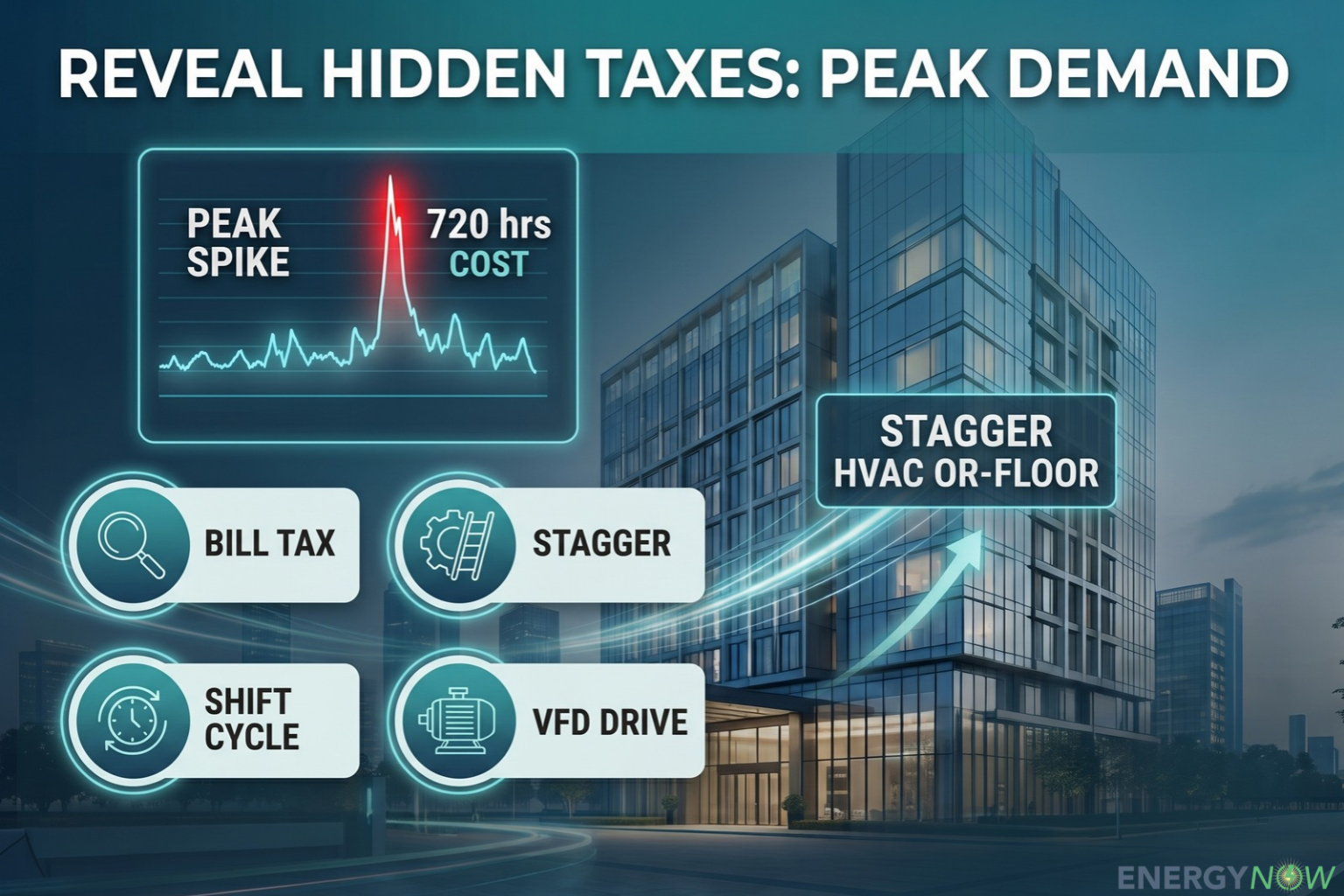
HVAC systems older than 10–12 years often have degraded efficiency ratings and struggle to maintain setpoints without running longer and harder. This not only increases electricity consumption but can push peak demand higher, triggering demand charges that can represent 20–40% of your total electricity bill. A demand audit will tell you whether aging equipment is inflating your demand charge exposure.
5. Water Heating Without a Strategy
Domestic hot water is the second-largest energy expense in most hotels after HVAC. Undersized or inefficient water heaters that run constantly, uninsulated distribution lines, and high-flow fixtures all contribute to waste. High-efficiency condensing water heaters, point-of-use supplementation for remote fixtures, and pipe insulation are three upgrades that often deliver payback inside 24 months.
| ⚡ Energy Now Tip: Conduct a hot water audit during a low-occupancy period. Measure actual hot water demand versus installed capacity, and check pipe temperatures at distant fixtures. Many hotels are significantly over-heating domestic water, wasting both gas and energy. |
How to Get Your Number
A professional energy audit will give you a facility-specific estimate of waste and a prioritized list of measures by payback period. Many utility companies offer free or subsidized audits for commercial customers. Energy Now can also conduct a remote bill analysis that identifies anomalies and benchmarks your property against similar hotels.
Energy waste isn’t inevitable — it’s just unfound. The hotels that close these gaps don’t just save money; they build more resilient operations that perform better during energy price spikes. Let Energy Now help you find your number.
Partner with us to create a smarter, more cost-effective energy strategy for your business. Contact us for a free consultation!