When a mid-Atlantic hotel chain with three properties came to Energy Now, their situation was familiar: rising utility bills, aging equipment, and a team that managed energy reactively — paying bills as they arrived rather than managing consumption proactively. Twelve months later, their all-in energy spend had fallen 22%, saving over $180,000 annually. Here’s exactly what they did.
The Starting Point: A Portfolio Energy Audit
The first step was a comprehensive audit of all three properties — a 220-room full-service hotel, a 110-room select-service property, and a 180-room extended stay. Each received an interval data analysis, a rate structure review, and an on-site equipment inspection. The audit surfaced three major issues: all three properties were on variable electricity rates in a rising market, each had different energy management approaches despite similar building profiles, and two properties had aging HVAC equipment operating well below nameplate efficiency.
Move 1: Locking In Fixed-Rate Supply Contracts Across All Three Properties
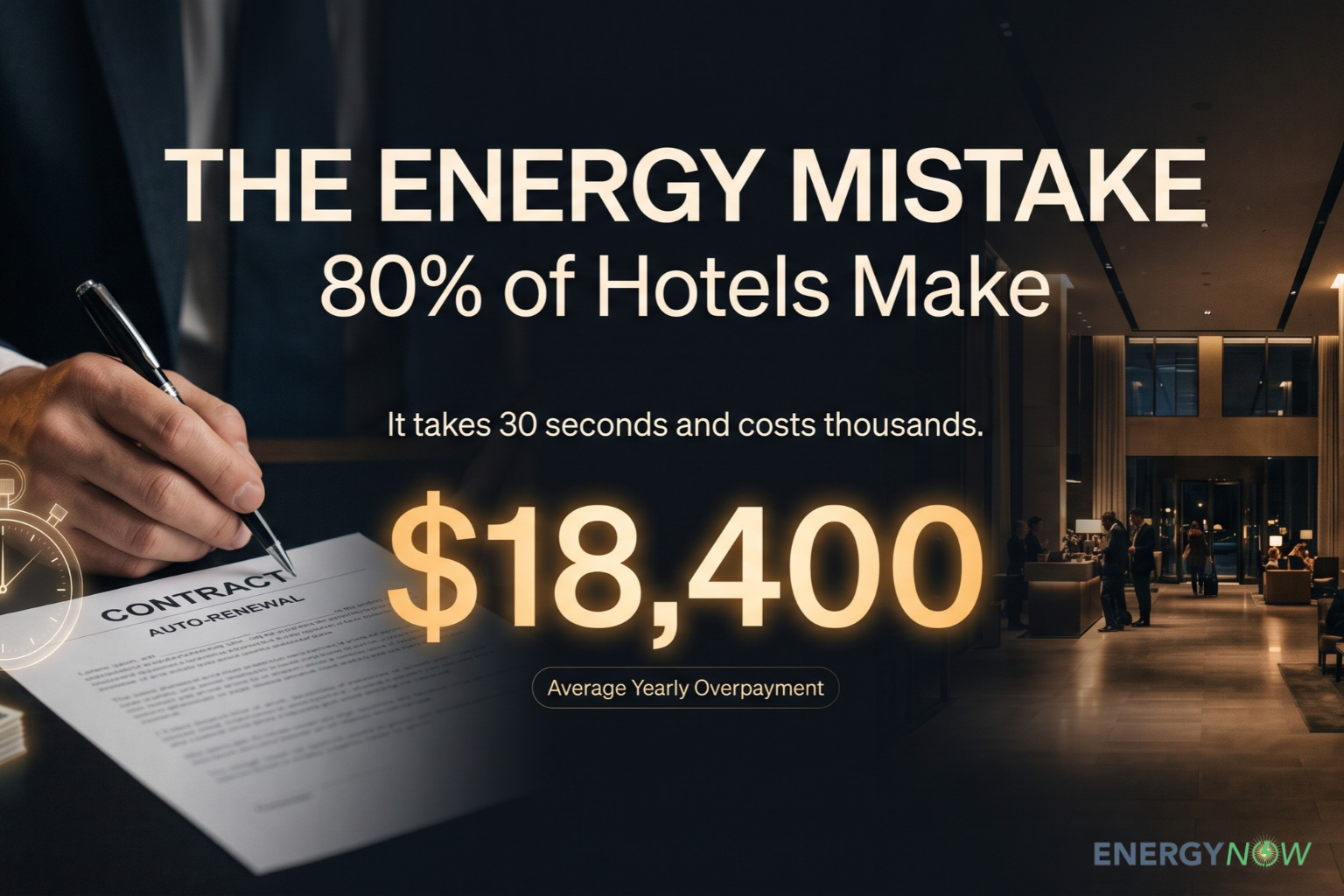
All three properties were re-contracted onto 24-month fixed-rate electricity supply agreements, negotiated simultaneously as a portfolio to achieve volume pricing. The combined load made the chain a more attractive customer for suppliers, and a competitive bid process produced rates 11% below the variable rate each property had been paying. Annualized savings from the contracting change alone: approximately $74,000.
| ⚡ Energy Now Tip: Even a small multi-property chain benefits from presenting its combined load to the market. Suppliers price group deals more competitively than individual property contracts. |
Move 2: Smart Thermostat Deployment in Guest Rooms
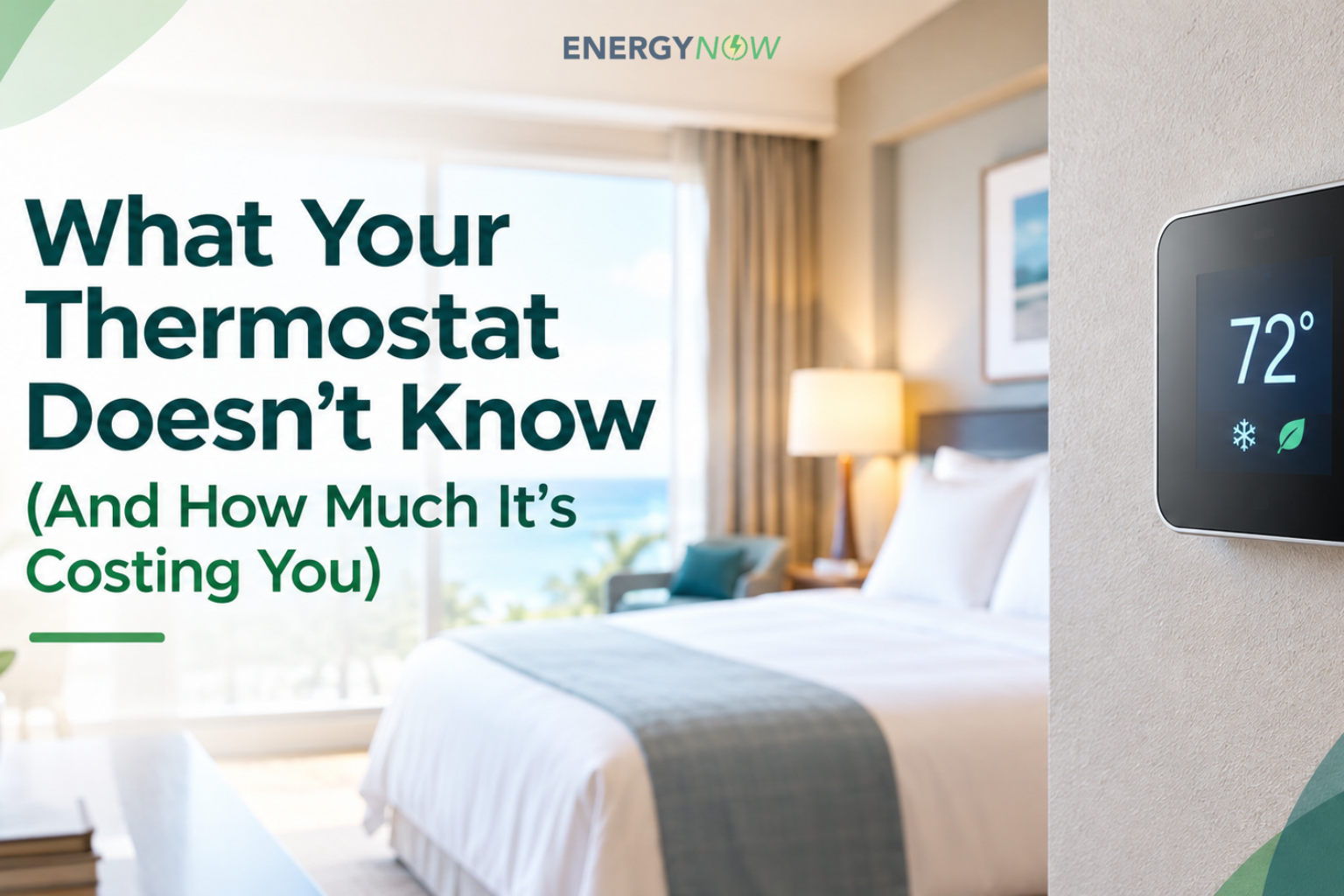
Occupancy-based smart thermostats were deployed across all guest rooms at all three properties — a total of 510 rooms. Rooms automatically set back to energy-saving temperatures when unoccupied and returned to comfort settings 30 minutes before anticipated check-in. HVAC energy use in guest rooms fell 28% across the portfolio. Annual savings: approximately $52,000.
Move 3: Demand Management to Reduce Peak Charges
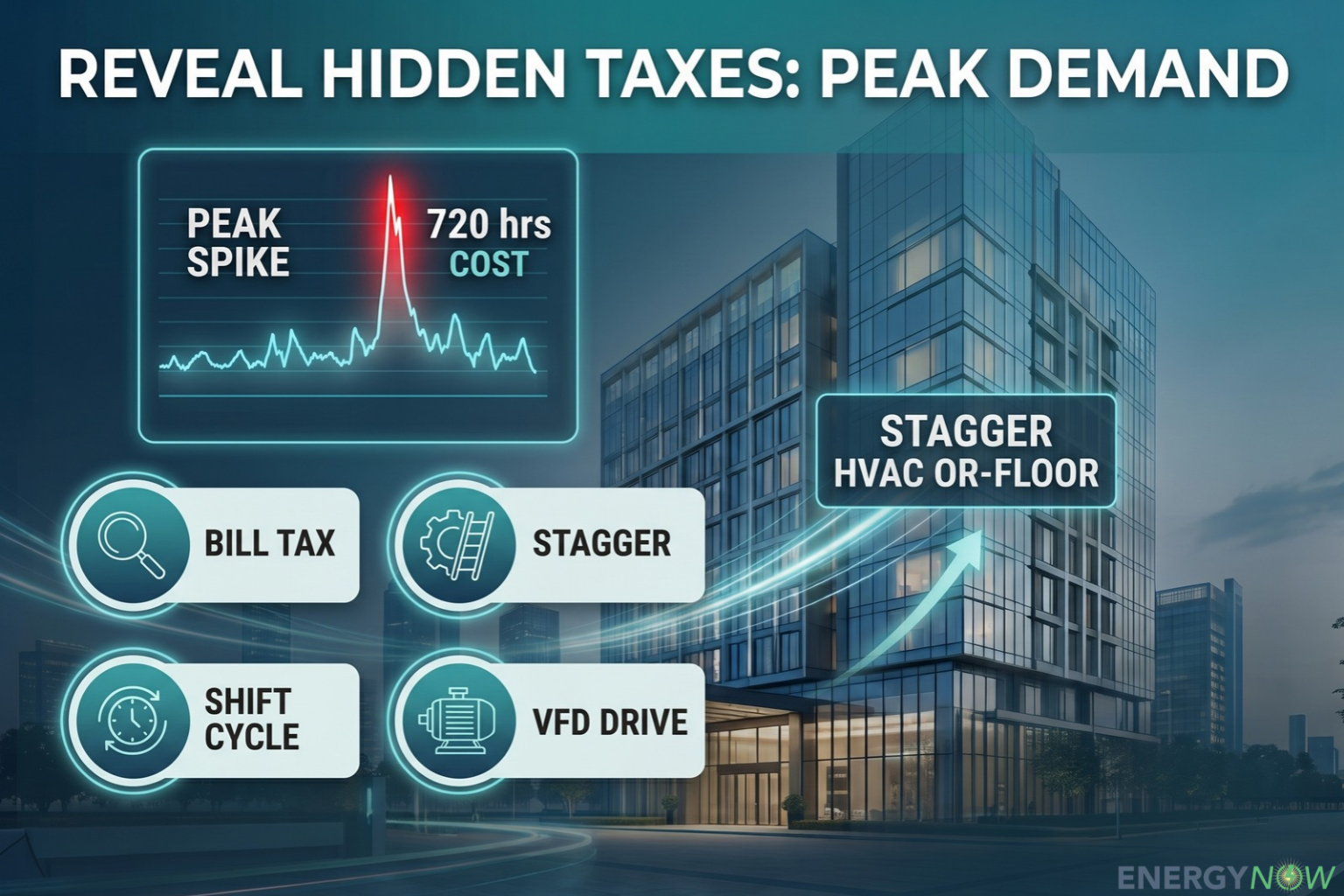
A review of interval data revealed that all three properties had unnecessarily high demand peaks driven by simultaneous morning HVAC startup. Staggering startup sequences by 15 minutes per floor — a software change requiring no equipment modification — cut the morning demand peak by 18%. Given that demand charges represented 28% of the electricity bill, this change saved approximately $31,000 annually.
| ⚡ Energy Now Tip: Demand charge management is often the highest-ROI energy measure available to hotels, because each kilowatt of peak reduction saves money every month for the life of the rate structure. Yet most operators don’t systematically analyze their demand profile. |
Move 4: Utility Rebate Capture
A systematic review of available utility rebate programs identified $24,000 in unclaimed incentives for LED retrofits and HVAC controls that had already been installed. Many hotel operators install qualifying equipment and never apply for the rebate. A retroactive application process captured these funds within 90 days of audit completion.
The 12-Month Result
Combined savings across all four initiatives: $181,000, representing a 22% reduction in the total energy budget. Total implementation cost (thermostats, professional services, application fees): approximately $58,000, for a net first-year benefit of $123,000 and a payback period of under four months on invested capital.
No renovation. No construction disruption. No impact on guest experience. Just systematic, well-executed energy management. This is what Energy Now does for hotel clients — and results like these are not the exception. They’re the standard.
Ready to take control of your energy costs? Contact us today for a consultation and discover how a custom energy strategy can transform your hotel chain.