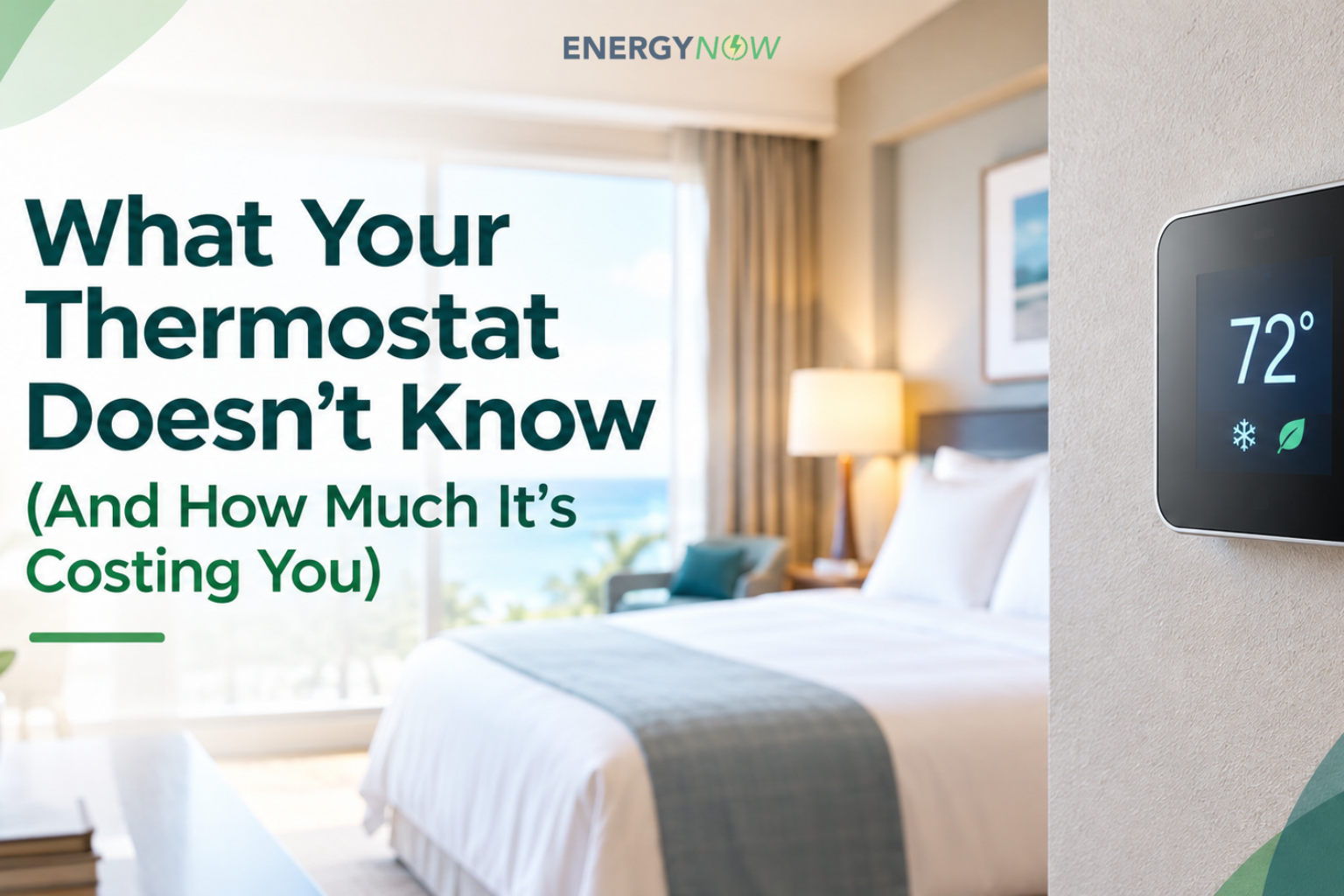
Artificial intelligence has arrived in the mechanical room — and for hotel operators willing to embrace it, the results are compelling. Smart building platforms that use machine learning to optimize HVAC, predict maintenance failures, and automatically respond to energy price signals are moving from cutting-edge to mainstream. Here’s what the technology looks like today and what it means for your operating budget.
What Makes a Building ‘Smart’?
A smart building doesn’t just automate — it learns. Traditional building automation systems (BAS) follow rules: if the thermostat reads X, run the HVAC at Y. AI-powered systems go further, analyzing historical occupancy patterns, weather forecasts, equipment performance trends, and real-time energy prices to make decisions that minimize cost without sacrificing comfort. Over weeks and months, these systems continuously improve as they accumulate more data about your specific property.
Predictive HVAC Optimization
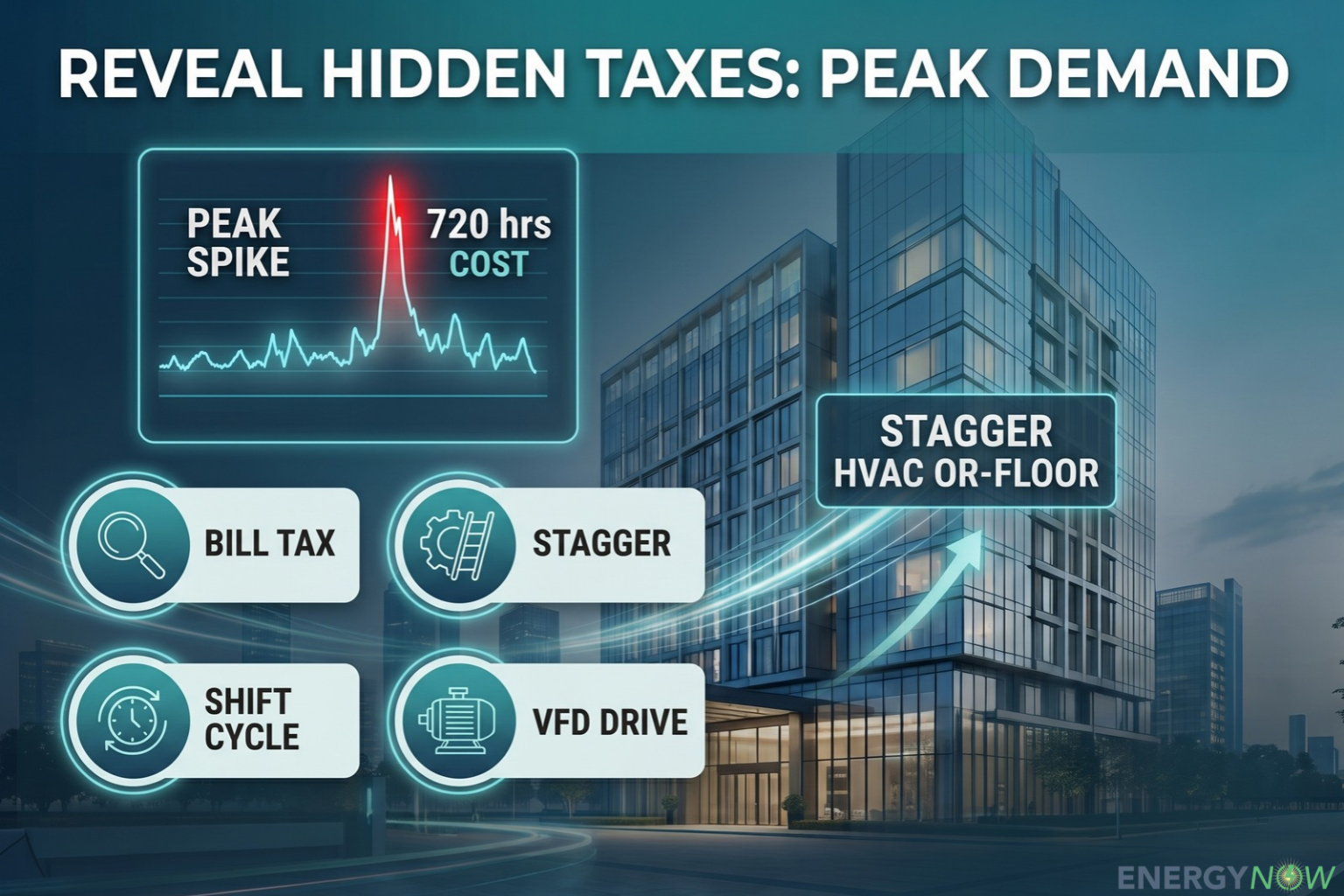
The most immediately valuable application for hotels is HVAC optimization. AI platforms can pre-cool or pre-heat a building during low-price hours, reducing the need to run equipment during expensive peak periods. For a 300-room full-service hotel, this kind of demand shifting can reduce electricity costs by $15,000–$30,000 per year — without any guest-facing impact.
| ⚡ Energy Now Tip: AI HVAC optimization works best in deregulated markets where electricity prices vary by the hour. If your hotel is in a time-of-use or real-time pricing rate structure, the ROI from smart optimization is significantly higher. |
Predictive Maintenance: Catching Failures Before They Happen
HVAC failures at a hotel don’t just cost money to repair — they cost guest satisfaction scores, potential revenue from unusable rooms, and emergency repair premiums. AI-powered maintenance platforms analyze vibration, temperature, and energy consumption data from HVAC equipment to detect anomalies that precede failures. Operators report catching compressor degradation, refrigerant leaks, and bearing wear weeks before failure.
| ⚡ Energy Now Tip: Hotels using predictive maintenance report 15–25% reductions in unplanned maintenance costs and significant decreases in emergency work order premiums, which run 3–5x higher than planned maintenance. |
Demand Response Automation
Many utilities offer demand response programs that pay commercial customers to reduce load during grid stress events. Manually participating in these programs is complex — you need to reduce load fast when called, without impacting guests. AI building platforms can automate the response, pre-cooling before an event, then briefly reducing HVAC output when the signal comes, and recovering afterward — all transparently and within comfort bounds.
| ⚡ Energy Now Tip: A 200-room hotel enrolled in a demand response program and using automated response technology can generate $8,000–$20,000 per year in utility incentive payments while simultaneously reducing its base energy costs. |
What Implementation Looks Like
Most modern smart building platforms are cloud-based and connect to your existing BAS through wireless sensors and API integrations. Full deployment for a mid-sized hotel typically takes 4–8 weeks and does not require a building renovation. SaaS pricing models mean many platforms carry a monthly subscription fee — meaning no large upfront capital commitment.
AI-powered building management is no longer a luxury for flagship properties. It’s a practical, increasingly affordable tool for any hotel serious about controlling its largest controllable operating expense. Energy Now works with hotel clients to evaluate, select, and implement smart building solutions that fit both the property and the budget.
Ready to take control of your hotel’s energy costs? Contact us today for a consultation and discover how a custom energy strategy can transform your hotel chain.