Most hotel general managers interact with energy the way most of us interact with our cell phone bill: they open it, wince at the total, and file it away. But your energy provider relationship is one of the most financially consequential vendor relationships your property has — and the right questions can save you tens of thousands of dollars per year. Here are the five conversations every GM should be having.
Question 1: ‘What Is My All-In Rate, Not Just the Supply Price?’
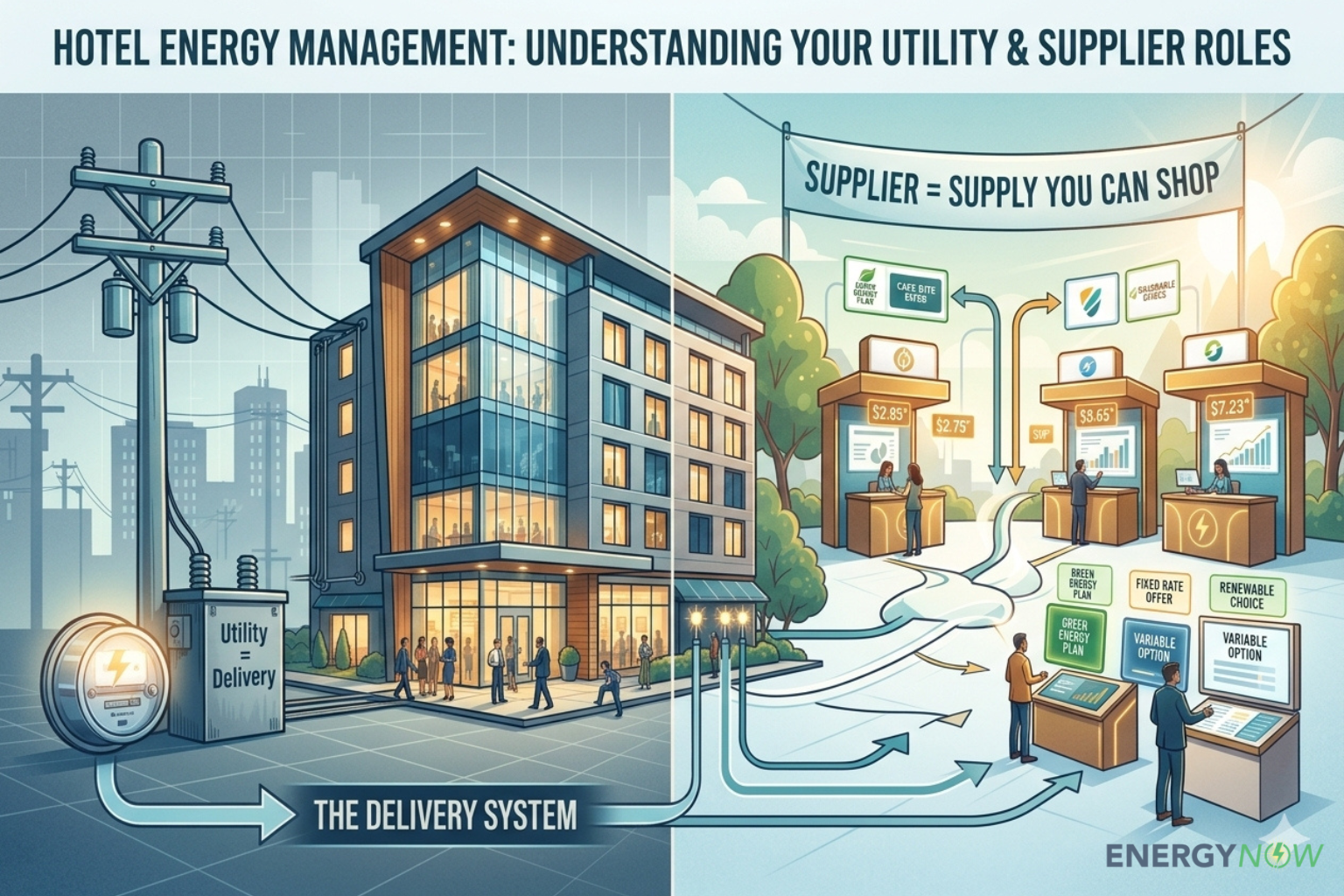
Retail electricity quotes often feature a supply rate that looks attractive but excludes significant pass-through charges: capacity costs, transmission charges, ancillary service fees, and utility distribution charges. The number that matters is the all-in rate — every cost per kilowatt-hour. Ask your current provider (or any supplier you’re evaluating) for a full bill analysis that breaks down every cost component.
| ⚡ Energy Now Tip: Energy Now clients receive a full cost stack analysis before any contract recommendation. In many cases, the difference between the quoted supply rate and the true all-in rate is 15–25%. |
Question 2: ‘What Rate Structure Am I On, and Is It the Best Option for My Load Profile?’
Most commercial customers are on default rate structures that were never optimized for their specific operation. Time-of-use rates benefit hotels that shift loads to off-peak hours. Demand-charge structures reward properties with flat, consistent demand profiles. Ask your utility for a rate comparison analysis — most will provide this for commercial customers at no charge — and evaluate whether switching to a different tariff would save money.
Question 3: ‘What Demand Response Programs Am I Eligible For?’
Demand response programs pay commercial customers to voluntarily reduce electricity use during grid stress events. Participation can generate $5,000–$25,000 per year in utility incentive payments for a mid-sized hotel. Ask your utility account representative what programs are available in your service territory, what the performance requirements are, and whether automated participation (through your BAS) is an option.
| ⚡ Energy Now Tip: Many hotels that qualify for demand response programs have never enrolled simply because no one asked. This is money sitting on the table — ask the question. |
Question 4: ‘What Rebates and Incentive Programs Are Available for Upgrades I’m Planning?’
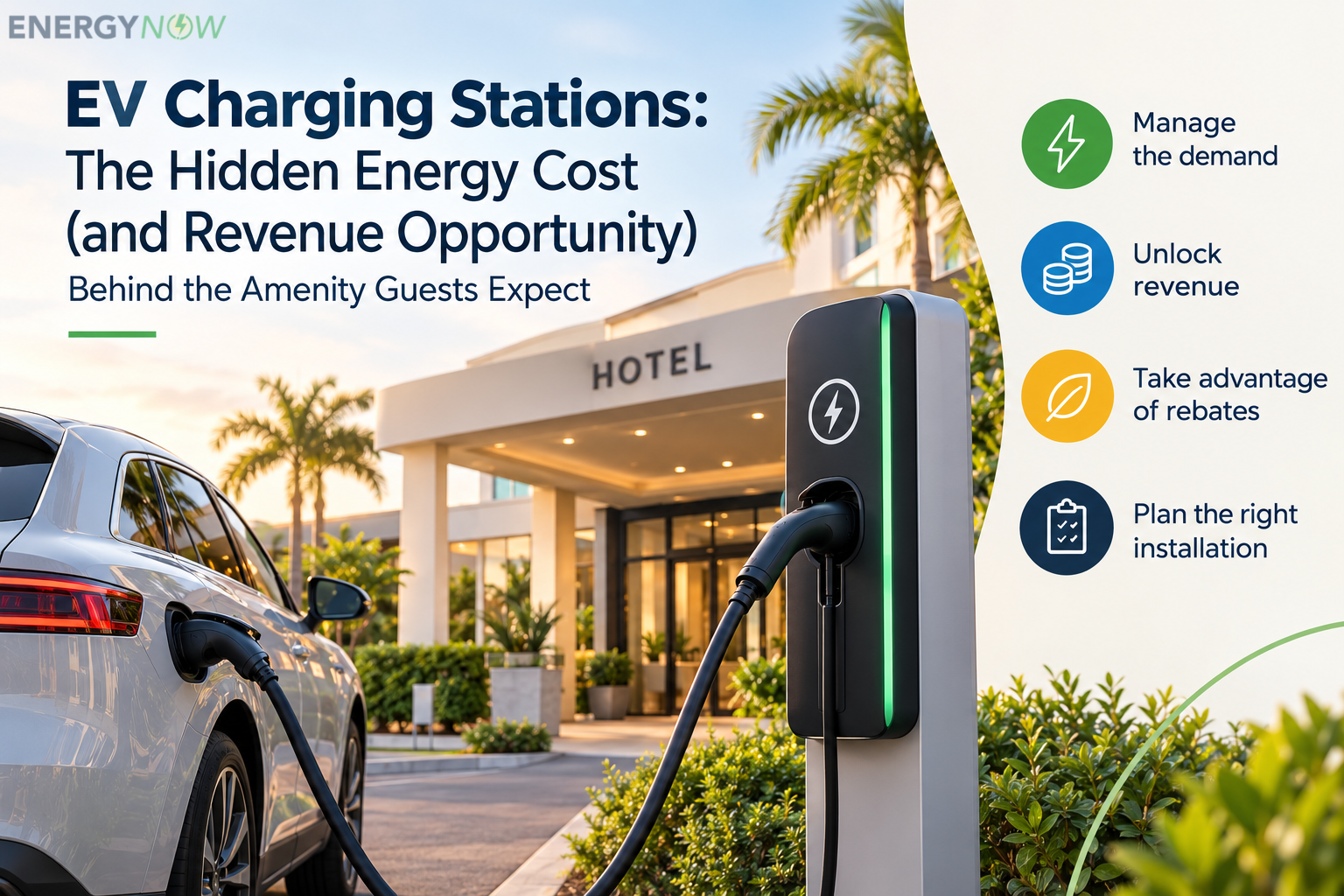
Before you approve any capital project involving HVAC, lighting, controls, or water heating, ask your utility what incentive programs apply. Most investor-owned utilities administer substantial rebate programs for commercial customers — LED retrofits, smart thermostats, high-efficiency HVAC, variable-frequency drives, and EV charging infrastructure are common qualifying categories. Uncaptured rebates often represent 10–30% of project cost.
Question 5: ‘What Does My Contract Renewal Date Look Like, and What Are My Options?’
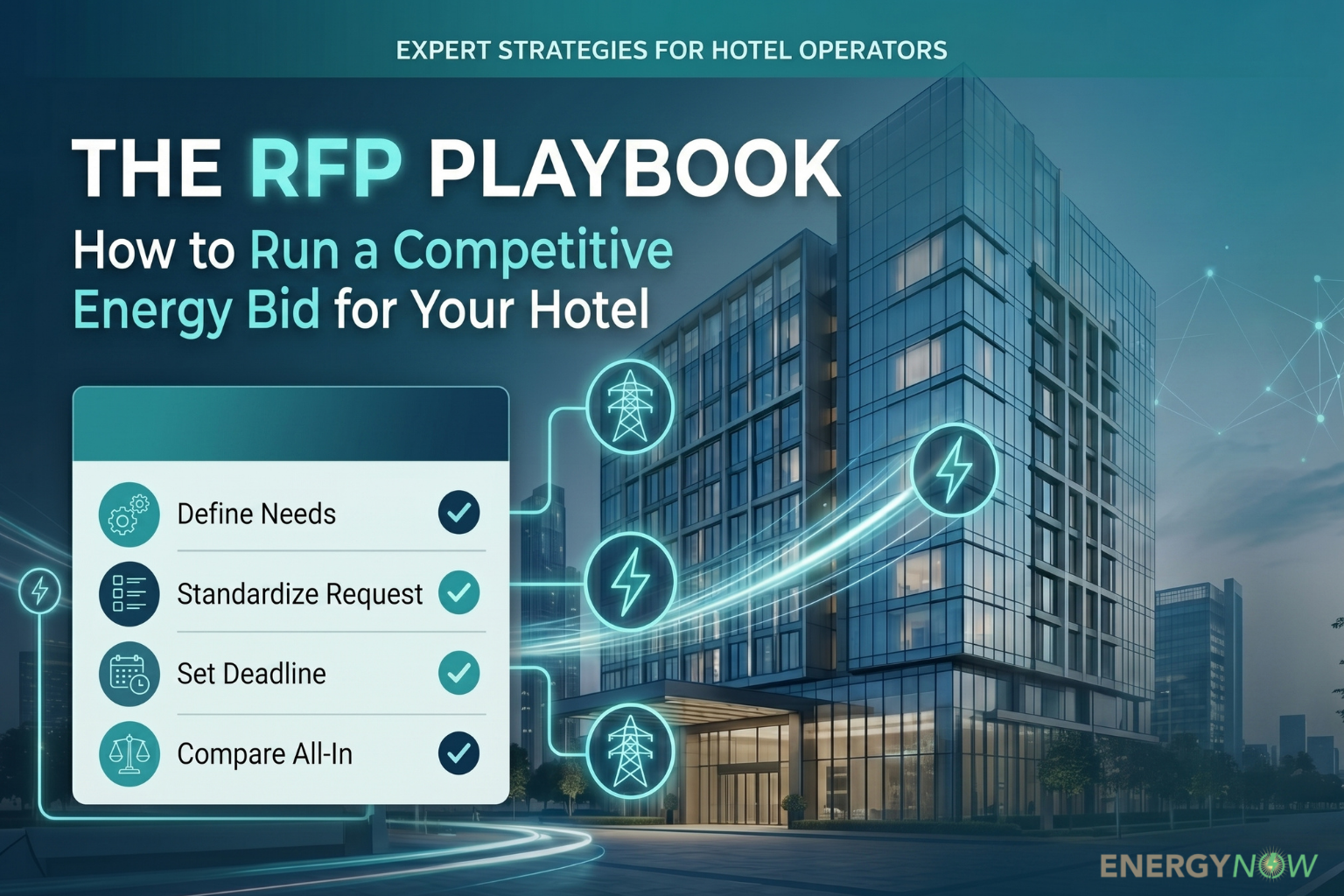
If you’re in a deregulated market, your energy supply contract has an expiration date — and renewing without shopping the market is one of the most common (and costly) mistakes hotel operators make. Ask your current supplier when your contract expires, what your automatic renewal terms are, and how far in advance you need to opt out to avoid an automatic rollover.
| ⚡ Energy Now Tip: Set a calendar reminder 90–120 days before any energy contract expiration. That window is when you have maximum leverage to negotiate or shop the market. Energy Now provides contract monitoring services that automate this process for multi-property clients. |
Your energy provider works for you — but only if you’re asking the right questions. GMs who engage proactively with their energy relationships consistently outperform those who treat energy as a fixed cost. Energy Now can be the energy-fluent partner you bring to these conversations.
Discover how strategic energy management can support your bottom line — connect with us today for a consultation.